
The first step to protecting your home and quality of life.
Get a free home drainage evaluation by registering.
What is Multifunctional Green Infrastructure (MGI)?
We believe in multifunctional green infrastructure (MGI) that protects local water ways and resources but also improves indoor air quality and the overall health of your home. Poor drainage around a home creates opportunities for mold and invasive insects to infect dwellings, degrading structures and the quality of life for residents.
We help households in low-income communities in the City of Raleigh and along the Bolin Creek Watershed of Carrboro/Chapel Hill implement MGI using cost-sharing funds covering up to 100% of the installation costs. The types of MGI we install may include:
-
Often gutters can be undersized causing clogs in the downspout or overtopping, leading to water pooling by the foundation of a home. Replacing gutters with the appropriate size can reduce or eliminate this issue.
-
This the practice of directing stormwater runoff from impervious areas to properly sized, sloped and vegetated areas. Both roofs and paved areas can be disconnected and treated using turf or other perennial vegetation.
-
Rainwater harvesting systems used to collect and store rainwater. They are intended to reduce stormwater runoff, encourage landowners to use harvested water and to conserve potable water.
-
Impervious surfaces like solid concrete driveways can worsen runoff. Permeable pavement is a porous material that enables stormwater to flow through it or nonporous blocks spaced so that water can flow between the gaps.
-
A shallow depression in the ground that captures runoff from a driveway, roof or lawn and allows it to soak into the ground, rather than running off into storm drains or streams.
-
The use of vegetation and bank reshaping to stabilize and protect banks of streams. This practice is used to prevent the loss of land or damage to utilities, roads, buildings or other facilities adjacent to the banks. It also increases the capacity of the channel during a rain which reduces stream erosion and provides wildlife habitat.
-
An area of perennial vegetative cover (grass, shrubs, trees, or a combination of vegetation types) established adjacent to and up-gradient from waterways. Benefits include reduced soil erosion and nutrient delivery as well as supports wildlife habitation.
-
A natural or constructed channel that is graded to required dimensions and established in turf for the stable conveyance of runoff. Benefits include reduced soil erosion, and sediment delivery to our water ways.
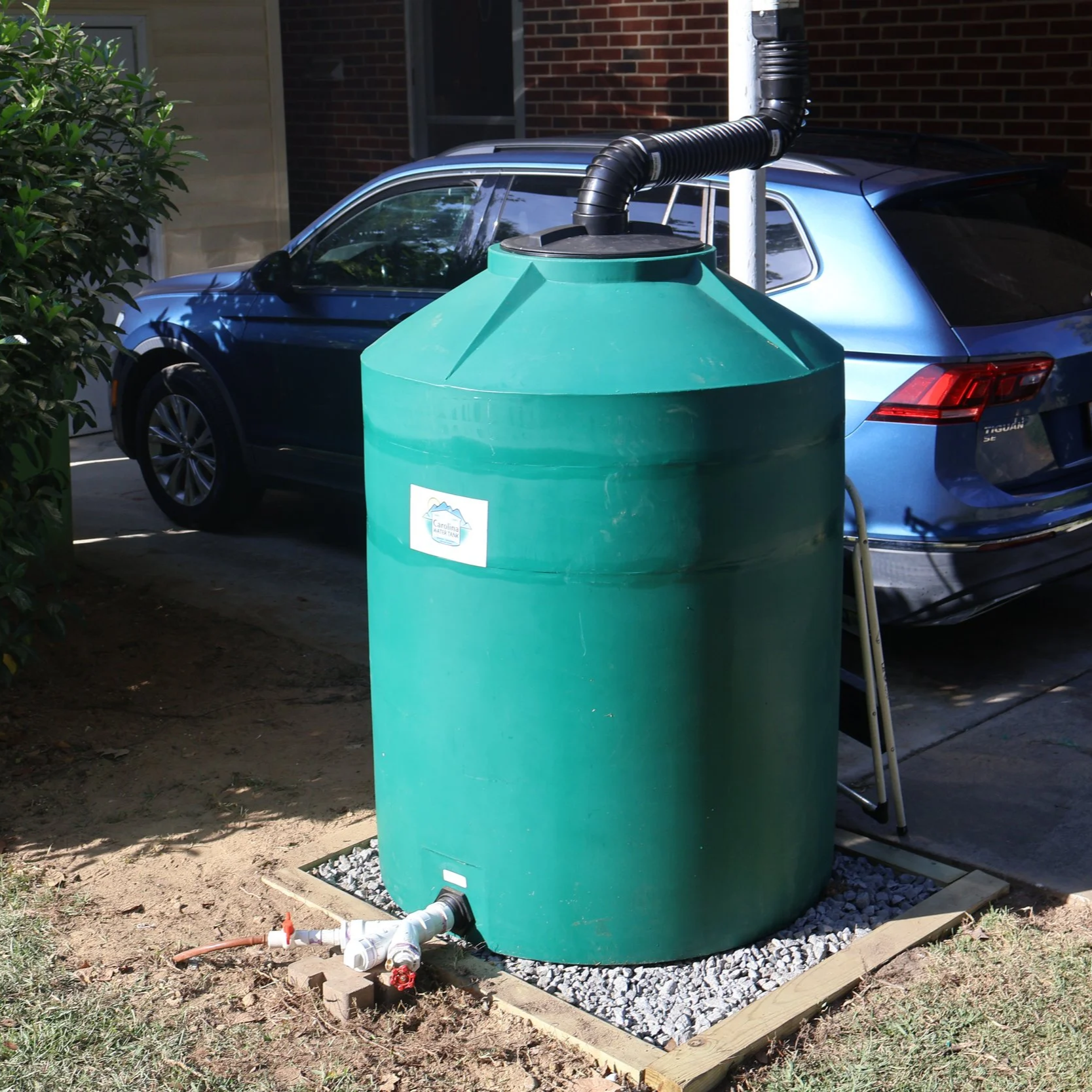
Cisterns
Cisterns are a great way to harvest rainwater for future use, such as watering flower beds or vegetable gardens, washing your car, and more. Depending on how much roof runoff you want to capture, cisterns come in a range of sizes and can be discreetly placed around corners, behind fences, beneath decks or porches, or buried. They can even be painted to match your home’s siding or decorated with a fun mural.

Rain Gardens
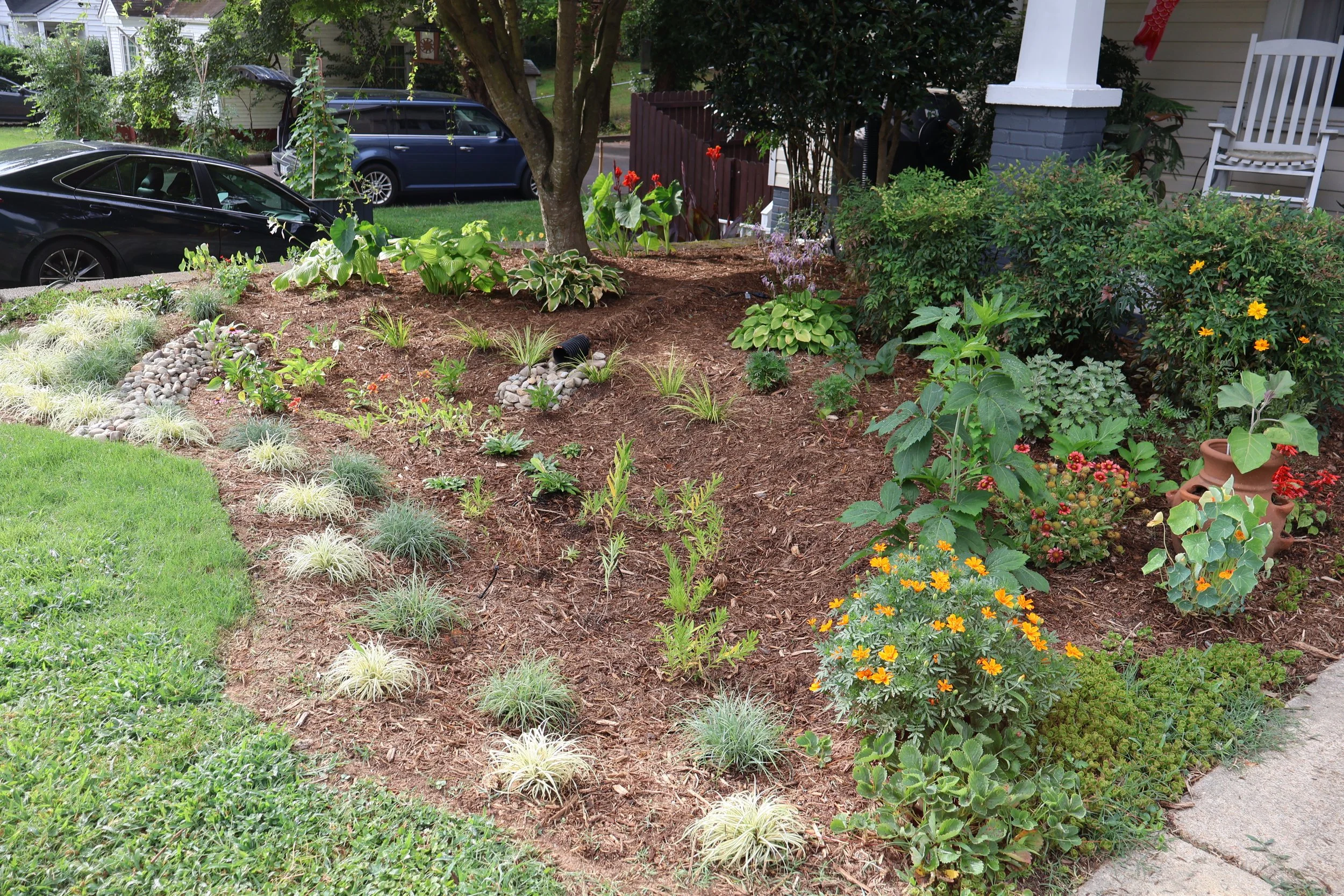
When stormwater runoff can’t be harvested and saved for personal use, rain gardens offer an effective and attractive alternative for reducing pollution and preventing erosion. These shallow, planted basins slow down and filter runoff, allowing water to soak naturally into the ground instead of carrying harmful pollutants into local waterways. By using native plants (especially pollinators), a rain garden becomes more than a functional stormwater tool; it also creates a habitat, boosts biodiversity, and adds beauty to your property.
Growing More Than Rain Gardens

Your property can become a project site for our students. Not only will you receive drainage and erosion control, but YOU will give local youth the opportunity to gain real world experience in implementing green infrastructure and creating a connection with their community.
The Problem
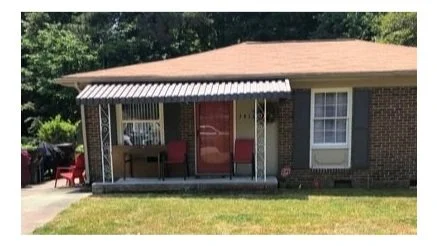
Too often the grade around a residential structure is inadequate for runoff to flow away from the home. The North Carolina Building code requires 6 inch fall over a minimum of 10 feet from the foundation. This is critical for structural protection.
In this picture, the foundation has cracked around the corner of the client’s home. Excess water put stress on the corner of the foundation after entering under the crawl space door. In addition, rain flowing off the roof is causing erosion on the outside of the foundation wall.

Improper gutters in combination with an improper grade will lead to excessive moisture under the crawl space.
In this picture, stormwater is overflowing the gutter in the center above the window. Spillover from the gutter then enters into the crawl space through the air vent due to the improper grade level. A proper grade level for this home should be 6” below the bottom of the air vent.
The Solution

The installation of multifunctional green infrastructure can address the improper gutter placement, piping, and site grade while installing stormwater practices.
Typical stormwater practices that would remediate site grade and provide water quality include: grass swales & impervious surface disconnection/downspout disconnection.
This holistic approach improves water quality, protects structural integrity, and improves indoor air quality.
The first step to protecting your home and quality of life.
Get a free home drainage evaluation by registering.